Tutorial 5 — A2A agents¶
You move one delegation edge from in-process communication to the Agent2Agent (A2A) protocol. Then you run a mixed topology: one specialist is remote and two stay local.
A2A lets agents in separate processes find and call each other. Infra handles agent-card discovery, protocol negotiation, and the task lifecycle. An agent card is the JSON description of an agent that A2A clients fetch. The MAS workflow and agent prompts do not change.
What you need¶
- Packages:
mas-ctlandmas-library-ioa(A2A plugins, in the standard install). - Prerequisites: Tutorial 0 (install, LLM access) and
Tutorial 2 (this tutorial reuses its MAS and
schedule_agent). - The official A2A client: a Go binary named
a2a(not the PyPI packagea2a-cli). - Run all commands from the repository root. Serving needs an API key only when a request reaches the LLM.
Step 1 — Read the A2A infra manifest¶
A remote agent is an Application endpoint keyed by the exact agent id
(fields: A2A, infra.md):
apiVersion: infra/v1
kind: Application
metadata:
  name: a2a-agents-local
spec:
  endpoints:
    schedule_agent:
      protocol: a2a
      usage: use-and-deploy
      url: http://127.0.0.1:9006
| Field | Meaning |
|---|---|
protocol |
a2a selects the A2A transport for that route. |
url |
Required. The remote agent endpoint. |
usage |
use consumes the peer; deploy exposes a local A2A server; use-and-deploy does both. |
headers |
Optional auth. Use env:VAR, never static secrets. |
The legacy expose: true reads as usage: use-and-deploy. Prefer usage.
Each layer owns one thing:
| Layer | Owns |
|---|---|
| MAS manifest | Agent ids, workflow, delegates_to topology |
| Agent manifest | Prompt, model, tools, skills |
Application infra |
Endpoint id, protocol, URL, headers, exposure |
Delegation always goes through AgentCommContract.send(target_agent_id, task, ...).
The local plugin runs an in-process agent. The A2A plugin sends the same task through an A2A client.
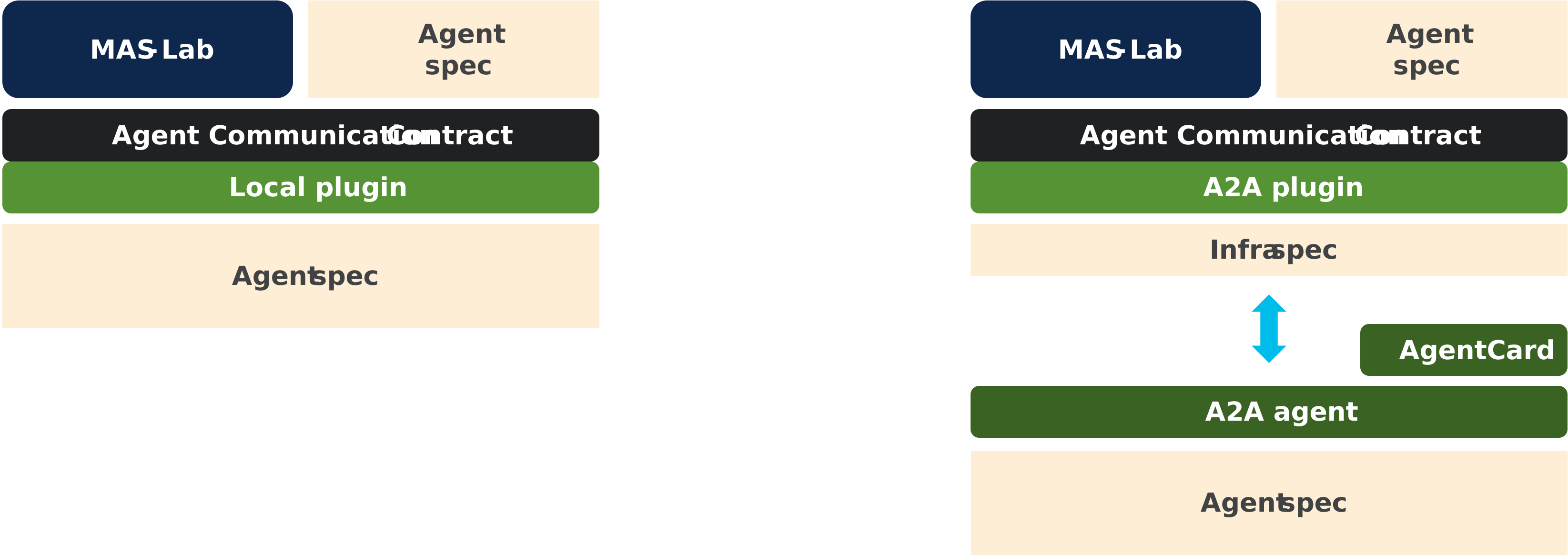
Figure 1: Infra replaces the local handler with A2A. The target id and contract stay fixed.
Step 2 — Serve an existing agent¶
Serve Tutorial 2's unchanged schedule_agent.
mixed-agents.infra.yaml
holds the endpoint shown in Step 1:
mas-ctl serve \
  "$PWD/docs/tutorials/02-creating-a-mas/agents/schedule-agent/agent.yaml" \
  --infra-ref "$PWD/library-samples/infra/mixed-agents.infra.yaml"
mas-ctl serve blocks and listens on port 9006. It starts without a key, but a request that reaches the LLM needs OPENAI_API_KEY.
In a second terminal, fetch the agent card:
a2a card get http://127.0.0.1:9006
You should see Name: schedule_agent, its interfaces (JSONRPC on port 9006, HTTP+JSON), and the skill transport-schedule-lookup. The runtime generates the card from the agent manifest.
Step 3 — Mix local and A2A agents¶
Tutorial 2's MAS delegates from moderator to three ids:
workflow:
  entry: moderator
  nodes:
    - id: moderator
      delegates_to: [schedule_agent, itinerary_agent, concierge_agent]
Start the Step 2 server first (mas-ctl serve command above, left running). --bind acts as usage: use, so this process does not take port 9006:
mas-ctl run-mas docs/tutorials/02-creating-a-mas/mas.yaml \
  --bind schedule_agent=a2a://127.0.0.1:9006/ \
  -q "Plan a trip and compare the available transport schedules."
Passing --infra-ref to run-mas instead is the all-in-one path: hosted use-and-deploy specialists bind in this process.
Do not combine it with a separate mas-ctl serve on the same port.
When a hosted agent has deploy or use-and-deploy, run-mas, chat, and tui still drive the conversation in-process.
You can query the live instance with a2a card get http://127.0.0.1:9001. Specialists with usage: use need their own mas-ctl serve (or --bind).
| Agent id | Owner | Dispatch |
|---|---|---|
schedule_agent |
Explicit Application endpoint, protocol: a2a |
Remote A2A message |
itinerary_agent, concierge_agent |
Local agents, no endpoint | In-process turn |
An explicit endpoint overrides a local agent with the same id. One MAS manifest runs as one process in development and distributed elsewhere.
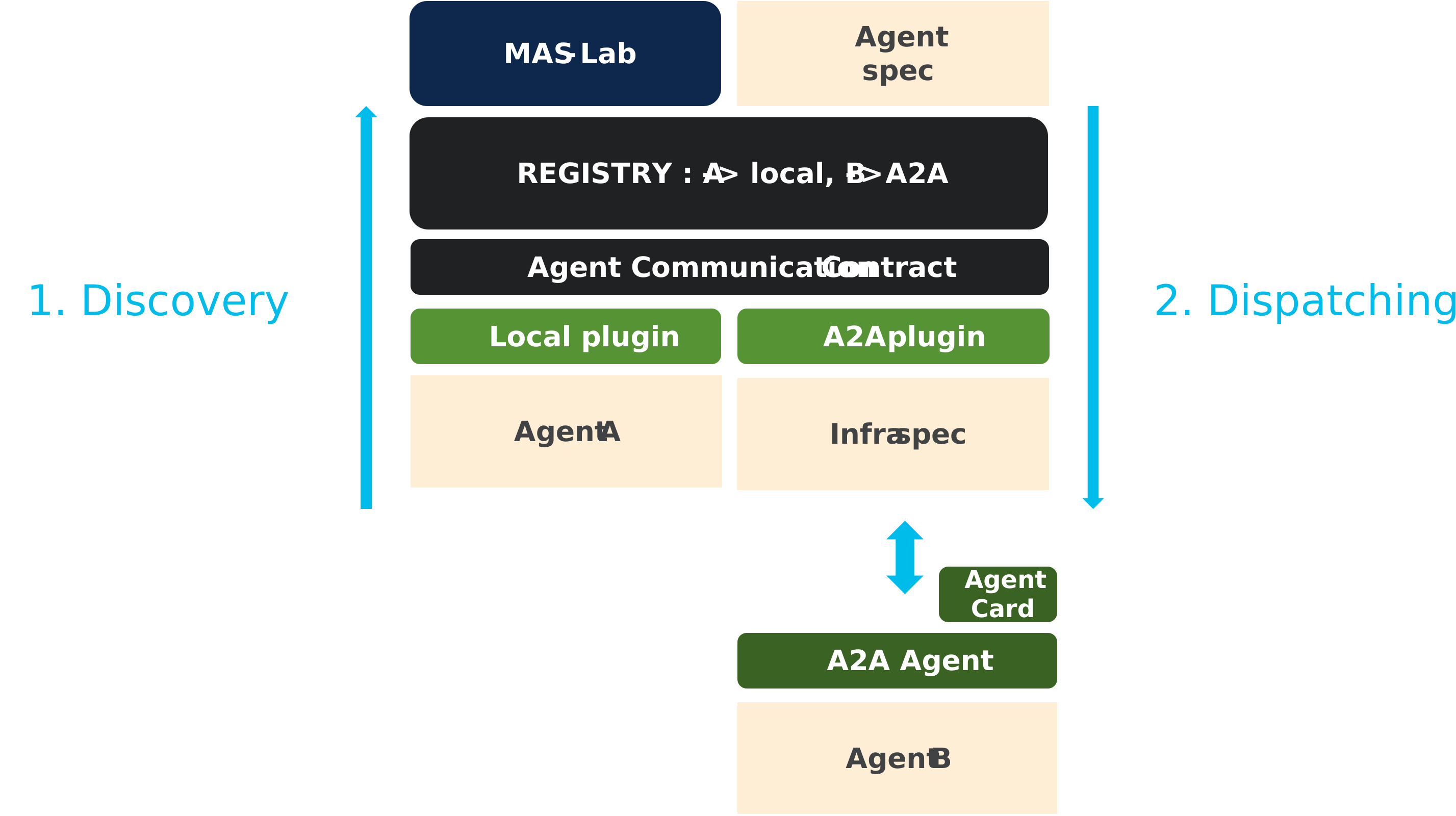
Figure 2: Dispatch resolves the target id and calls one AgentCommContract implementation.
The A2A client reads the peer's agent card to pick a wire binding.
How routing works:
- MAS Lab records the MAS's agents as local routes and reads
delegates_tofor target ids. - An endpoint with
usage: useoruse-and-deploycreates an external provider that overrides the local route for that id. - A delegation to
schedule_agentfetches its card and picks an advertised interface. Other ids stay local.
Missing routes fail when the table is built, so protocol selection is deterministic.
Step 4 — Switch back to local communication¶
Run the same MAS with no --bind and no --infra-ref (the Step 2 server is not needed):
mas-ctl run-mas docs/tutorials/02-creating-a-mas/mas.yaml \
  -q "Plan a trip and compare the available transport schedules."
All three specialists now use the local provider.
Step 5 — Keep a session across requests¶
A2A reuses the protocol's contextId as the session id. Requests without one are independent sessions.
Start the Step 2 server first. Send the first response's contextId on a later request to join the same session:
from library_ioa.plugins.a2a.client import A2AClient

client = A2AClient(url="http://127.0.0.1:9006")

first = client.send_message("Plan day one around the morning train.")
print(first)  # look for "context_id" — top-level on a Task response,
              # nested under "result" on a Message response
context_id = first.get("context_id") or (first.get("result") or {}).get("context_id")

second = client.send_message("Now add day two.", context_id=context_id)
client.close()
The one-shot CLI in Step 6 has no --context-id flag yet, so call A2AClient for sessions.
The server uses the inbound contextId as session_id (library_ioa/plugins/a2a/exposure.py) or mints a new one.
Two callers with the same contextId share one turn queue: the second turn waits.
Tutorial 13 covers queueing and attaching to a live session.
Step 6 — Test the remote agent directly¶
With the Step 2 server running (both commands reach the LLM, so they need OPENAI_API_KEY):
a2a send -a http://127.0.0.1:9006 \
  "Find transport schedules from Luminara to Verdantia."

python -m library_ioa.plugins.a2a.cli --a2a http://127.0.0.1:9006 \
  --a2a-transport JSONRPC \
  --message "Find transport schedules from Luminara to Verdantia."
The first uses the official a2a CLI. The second uses the repository's one-shot Python client and prints JSON.
What you learned¶
- Only infra changed. A2A owns discovery, transport negotiation, and the task lifecycle.
- The workflow, target ids, agent behavior, and
AgentCommContractstay stable. - An explicit endpoint overrides a local agent with the same id, so one MAS runs local or distributed.
Reference: A2A, A2A internals, infra.md § A2A agent endpoints, Kernel operations, Thin waist, A2A compliance workflow.
Next¶
Tutorial 6 — Agent skills, or Tutorial 13
to attach to a running session by its contextId.